Mastering Time Management Skills: 14 Essential Steps to Boost Productivity
Welcome to this comprehensive guide on improving time management skills, where you will learn the most effective techniques to prioritize tasks, avoid procrastination, and achieve your goals. In today's fast-paced world, efficient time management is crucial to succeed in both personal and professional life. By following these simple yet powerful steps, you will be able to manage your time more effectively, reduce stress, and increase productivity. So, let's dive in and explore the world of time management skills, tailored specifically for individuals looking to enhance their productivity and achieve a better work-life balance.
Step 1: Set Clear Goals and Priorities to Enhance Time Management Skills
To improve your time management skills, it's essential to set clear goals and priorities. Start by identifying your short-term and long-term objectives, and then categorize them based on their importance and urgency. Use the Eisenhower Matrix to prioritize tasks into four quadrants: urgent and important, important but not urgent, urgent but not important, and not urgent or important. For example, if you're a student, your goal might be to complete a project within a tight deadline, so you would prioritize tasks related to the project accordingly. 
Step 2: Use a Time Management System to Boost Productivity and Efficiency
Implementing a time management system is vital to track your progress and stay organized. You can use a planner, calendar, or app to schedule your tasks and set reminders. Consider using the Pomodoro Technique, which involves working in focused 25-minute increments, followed by a 5-minute break. This technique can help you stay focused and avoid burnout. For instance, you can use a tool like Trello or Asana to create boards, lists, and cards to organize your tasks and projects. 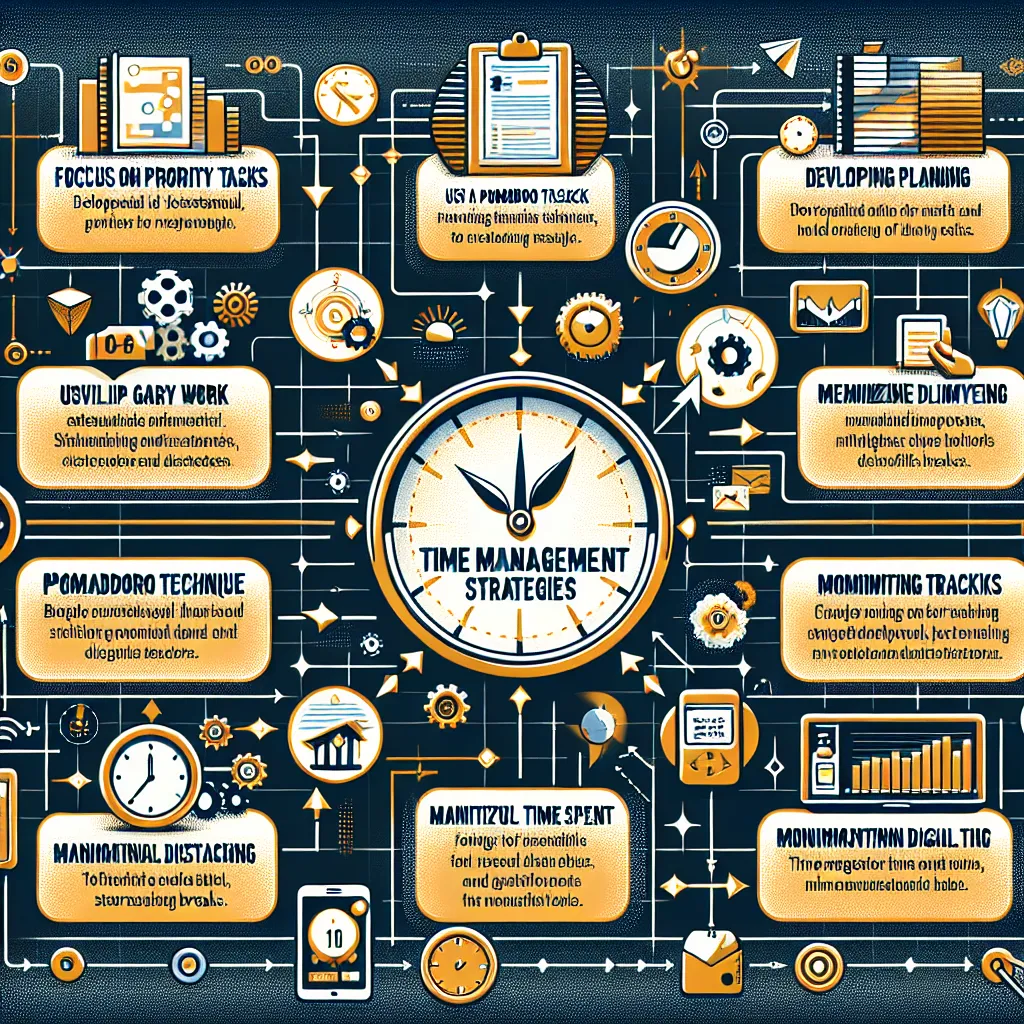
Step 3: Avoid Multitasking to Improve Time Management Skills
Multitasking can be a significant productivity killer, as it can lead to distractions and decrease focus. Instead, try to concentrate on a single task at a time. Use the "one touch rule" to handle each task as it comes up, and avoid switching between tasks too frequently. For example, if you're working on a report, try to complete it in one sitting without checking your email or social media. This will help you stay focused and ensure that you're using your time efficiently. 
Step 4: Learn to Say No to Non-Essential Tasks and Commitments
Saying no to non-essential tasks and commitments is crucial to protect your time and energy. Be mindful of your workload and avoid taking on too much at once. Remember, it's better to say no to a request than to overcommit and underdeliver. Use a simple "yes" or "no" response to requests, and avoid giving false hope or leading people on. For instance, if a colleague asks you to attend a non-essential meeting, it's okay to say no and suggest an alternative solution, such as a phone call or email update. 
Step 5: Use Time-Blocking to Schedule Tasks and Manage Time Effectively
Time-blocking involves scheduling large blocks of uninterrupted time to focus on important tasks. This technique can help you stay organized and ensure that you're using your time efficiently. Start by identifying your most important tasks and scheduling them in fixed, uninterrupted blocks. Use a calendar or planner to block out dedicated time for each task, and avoid scheduling multiple tasks at the same time. For example, you can block out 2 hours in the morning to work on a critical project, and then take a break to recharge. 
Step 6: Avoid Procrastination by Breaking Down Large Tasks into Smaller Ones
Procrastination can be a significant obstacle to productivity, but it can be overcome by breaking down large tasks into smaller, manageable ones. Use the "divide and conquer" approach to tackle complex tasks, and create a series of smaller, achievable milestones. For instance, if you're working on a research paper, break it down into smaller tasks such as researching, outlining, drafting, and editing. This will help you stay focused and avoid feeling overwhelmed by the task as a whole. 
Step 7: Use Technology to Streamline Time Management and Increase Productivity
Technology can be a powerful tool to streamline time management and increase productivity. Use apps, software, and other digital tools to automate repetitive tasks, track progress, and stay organized. Consider using tools like RescueTime or Toggl to track how you spend your time, and identify areas where you can improve. For example, you can use a tool like Zapier to automate tasks such as data entry or email marketing, freeing up more time to focus on high-priority tasks. 
Step 8: Establish a Morning Routine to Boost Energy and Focus
Establishing a morning routine can help boost your energy and focus, setting you up for success throughout the day. Start by waking up at the same time every day, and then create a consistent routine that works for you. This can include activities such as exercise, meditation, or journaling. For instance, you can start your day with a 30-minute yoga routine, followed by a healthy breakfast and a quick review of your schedule for the day. 
Step 9: Take Breaks to Recharge and Avoid Burnout
Taking breaks is essential to recharge and avoid burnout. Use the "work-life balance" approach to schedule breaks throughout the day, and make sure to take time off when you need it. Consider using the "2-minute rule" to take short breaks every hour, and use that time to stretch, move around, or practice deep breathing exercises. For example, you can take a 10-minute break to grab a snack, chat with a friend, or simply stretch your legs. 
Step 10: Learn to Delegate Tasks and Responsibilities
Delegating tasks and responsibilities can help you free up time and energy, and allow you to focus on high-priority tasks. Identify tasks that can be delegated to others, such as colleagues, subordinates, or freelancers, and use clear communication to ensure that tasks are completed to your satisfaction. For instance, you can delegate tasks such as data entry or virtual assistance to a virtual assistant, freeing up more time to focus on strategic tasks. 
Step 11: Use a "Stop Doing" List to Eliminate Non-Essential Tasks
Using a "stop doing" list can help you eliminate non-essential tasks and free up time for more important activities. Identify tasks that are no longer necessary or that are taking up too much time, and stop doing them. Consider using the "80/20 rule" to identify the 20% of tasks that are generating 80% of the results, and focus on those tasks. For example, you can stop checking social media every hour, and instead allocate that time to more important tasks. 
Step 12: Prioritize Self-Care to Maintain Energy and Focus
Prioritizing self-care is essential to maintain energy and focus throughout the day. Make sure to get enough sleep, exercise regularly, and eat a healthy diet. Consider using a self-care checklist to track your progress, and schedule self-care activities into your daily routine. For instance, you can schedule a weekly massage, a daily walk, or a monthly yoga retreat to help you relax and recharge. 
Step 13: Review and Adjust Your Time Management Plan Regularly
Reviewing and adjusting your time management plan regularly is crucial to ensure that you're using your time effectively. Schedule regular reviews to track your progress, identify areas for improvement, and make adjustments as needed. Consider using a time management template to track your progress, and make sure to celebrate your successes along the way. For example, you can review your schedule every week, and adjust your plan to reflect changes in your priorities or workload. 
Step 14: Stay Flexible and Adapt to Changing Circumstances
Staying flexible and adapting to changing circumstances is essential to effective time management. Be prepared to adjust your schedule or plan when unexpected events or tasks arise, and use a flexible mindset to navigate uncertainty. Consider using a "flexible planning" approach to schedule tasks, and make sure to leave some buffer time in your schedule for unexpected events. For instance, you can use a "flexible schedule" template to plan your day, and adjust your plan as needed to reflect changing circumstances. 
Frequently Asked Questions (FAQs)
Here are some frequently asked questions about time management skills:
Q: What is the most effective way to manage time? A: The most effective way to manage time is to use a combination of techniques, such as setting clear goals, prioritizing tasks, using a time management system, and avoiding multitasking.
Q: How can I avoid procrastination? A: To avoid procrastination, break down large tasks into smaller ones, use the Pomodoro Technique, and eliminate distractions.
Q: What is the importance of self-care in time management? A: Self-care is essential to maintain energy and focus throughout the day. Prioritize activities such as sleep, exercise, and healthy eating to ensure that you're using your time effectively.
By following these 14 essential steps and staying committed to your goals, you'll be well on your way to mastering time management skills and achieving a better work-life balance. Remember to stay flexible, adapt to changing circumstances, and continuously review and adjust your plan to ensure that you're using your time effectively. Happy time managing!
Improve Time Management Skills
Improve Time Management Skills
How To Improve Your Time Management Skills (7 Easy Ways)

How to Improve Your Time Management Skills (7 Easy Ways)
10 Ultimate Tips For Undergraduate Students To Improve Time Management

10 Ultimate Tips for Undergraduate Students to Improve Time Management ...